Missing teeth can affect how you eat, speak, and feel about your smile, so choosing how to replace them is an important decision. Dental bridges and partial dentures can both restore the spaces left behind, but each works differently and comes with its own considerations for everyday life. Understanding those differences can help you decide which option better fits your goals, budget, and lifestyle.
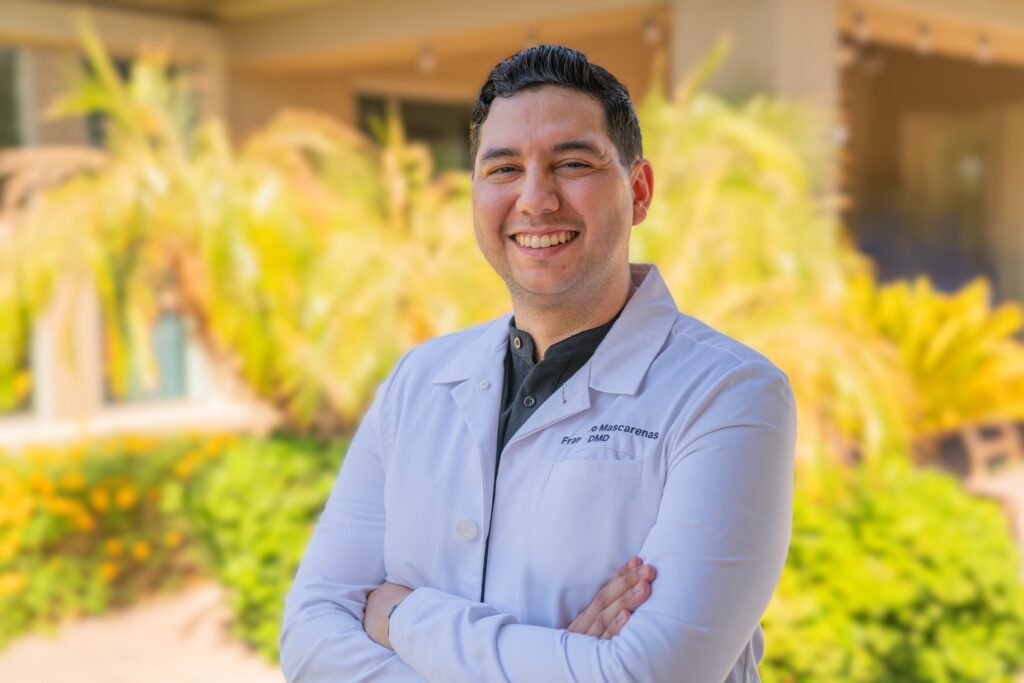
At Sonoran Dental Studio in Buckeye, we walk you through your denture and bridge options so you can feel confident about your decision. Dr. Mascarenas and our team take the time to understand what you need from your restoration, explain how each option could work for your smile, and answer your questions before you move forward.
How Does a Dental Bridge Work?
A dental bridge is a fixed restoration that fills the space left by one or more missing teeth. It gets its name because it literally bridges the gap, anchoring artificial teeth, called pontics, to the natural teeth or implants on either side of the space. Those anchor teeth are called abutments, and they support the false teeth so the bridge stays firmly in place.
A bridge is cemented or bonded into position, so it does not come out for cleaning the way a removable appliance does. You brush and floss around it just as you would your natural teeth, though it does require some extra care underneath the pontic to keep the gum tissue healthy. Many patients like how a bridge feels and functions similarly to natural teeth, since it does not shift or move while eating or speaking.
How Does a Partial Denture Work?
A partial denture is a removable appliance that replaces multiple missing teeth using a gum colored base with clasps or attachments that grip onto your remaining natural teeth. Unlike a bridge, a partial denture can be taken out for cleaning and put back in each day, which makes maintenance a little more hands-on.
Partial dentures work well for patients who are missing several teeth in different areas of the mouth, since one appliance can address multiple gaps at once. They can also serve as a helpful option if you are not ready for a more permanent solution, or if a bridge is not the best fit for your particular mouth. Some patients transition to a fixed option like dental implants later on, while others find a partial denture meets their needs long term.
Which Option Might Be Right for You
The right choice between a bridge and a partial denture depends on a few different factors, including how many teeth you are missing, the health of your remaining teeth and gums, and your daily habits. According to the Centers for Disease Control and Prevention, premature loss of a permanent tooth can lead to other complications if it is not addressed, which is one reason it helps to explore your replacement options sooner rather than later. A few questions worth thinking through as you weigh your options include:
- How many teeth are you missing, and are they grouped or spread out?
- Do you prefer a fixed solution or one you can remove for cleaning?
- What is your budget, and does your insurance or membership plan cover part of the cost?
- How healthy are the teeth or gum tissue that would support the restoration?
Once you have thought through these questions, a conversation with your dentist can help narrow things down further. We also look closely at the health of your gums during this process, because untreated gum disease can affect how well either option fits and functions over time.
Find the Right Fit for Your Smile with Sonoran Dental Studio
Deciding between a dental bridge and a partial denture does not have to feel overwhelming. Dr. Mascarenas and our team at Sonoran Dental Studio take the time to explain how each option works, what it could mean for your everyday life, and which may be better suited to your needs. As a member of the Academy of General Dentistry and the Arizona Academy of General Dentistry, Dr. Mascarenas brings a thoughtful, detail-oriented approach to helping patients throughout Buckeye restore missing teeth without feeling pressured into a decision.
Finding the right way to restore your smile depends on your individual needs, and we can help you choose an option that fits your lifestyle and budget. We are in-network with most PPO dental plans, and our in-house membership plan provides another option for patients without insurance. If you still have questions about which treatment might be right for you, fill out our contact form to schedule a visit with Dr. Mascarenas and talk through your choices together.