Traditional dentures can slip while eating or talking, and no amount of adhesive fully solves that problem for every patient. Implant-retained dentures anchor your denture to a small number of dental implants, giving you a level of stability and confidence that a denture resting on the gums alone simply cannot match.
Dr. Mascarenas and the team at Sonoran Dental Studio design implant-retained dentures for patients throughout Buckeye who want the security of implant support without committing to a fully fixed, permanent restoration, offering a middle ground between traditional dentures in Buckeye and a completely fixed arch. This approach gives patients the retention benefits of implants while keeping the denture removable for cleaning and maintenance, which many patients find more manageable day to day.
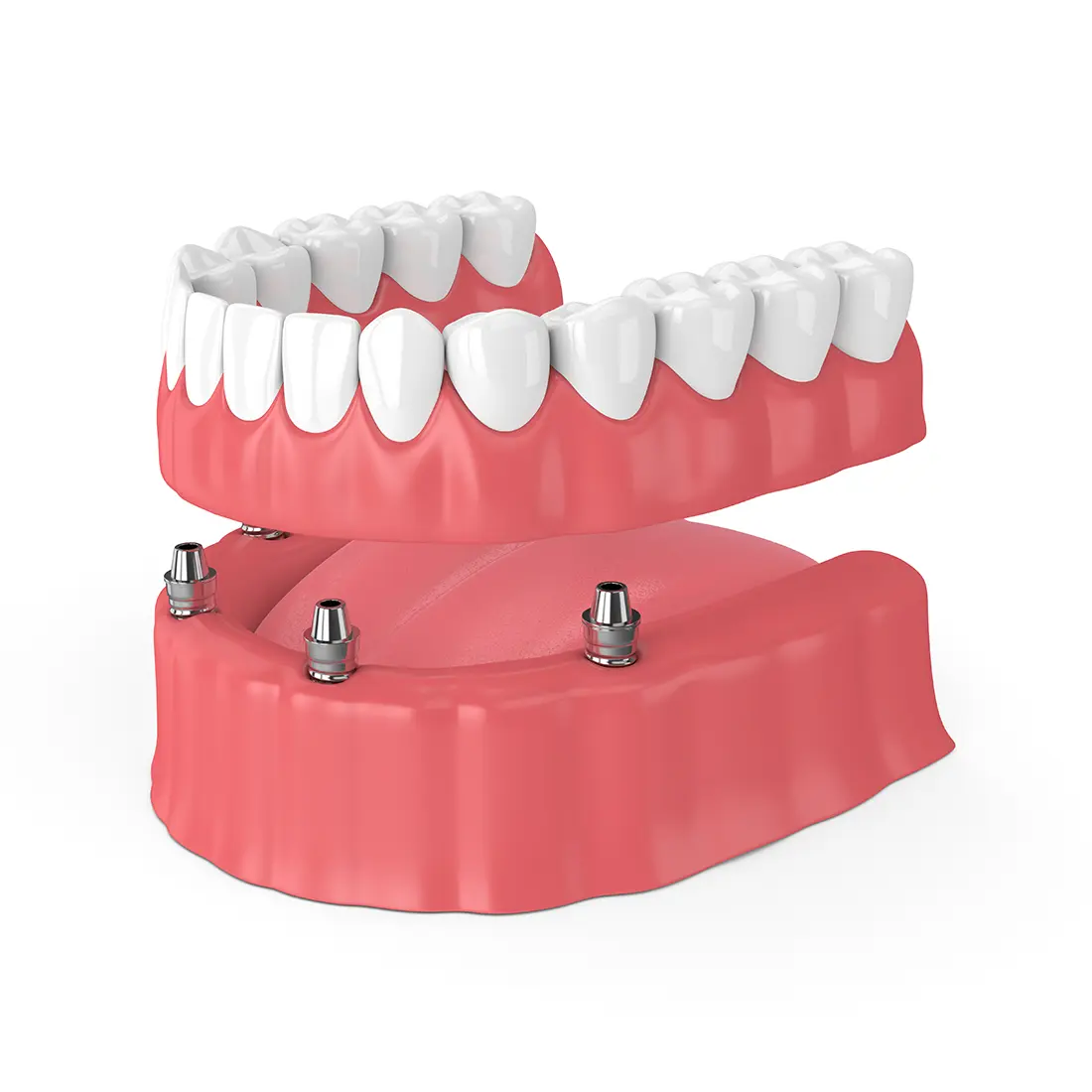
Implant-retained dentures, also called overdentures, are removable dentures that snap or clip onto a small number of implants placed in the jaw, typically two to four depending on the arch being restored. Unlike a fixed full-arch restoration, an implant-retained denture is designed to be taken out at night and for cleaning, while the implants themselves stay in place and provide a stable anchor point every time the denture is reinserted.
The attachment system connecting the denture to the implants comes in a few different designs, including ball attachments and bar-retained systems, each offering a slightly different balance of stability and ease of removal, and each functions differently from a fixed restoration like a dental crown that is permanently cemented in place over a single implant. Because the denture snaps onto a fixed number of anchor points rather than relying on suction or adhesive against the gum tissue, patients typically notice a significant improvement in how securely the denture stays in place while eating and speaking.
Most patients who are missing most or all of their teeth in an arch and want more stability than a traditional denture provides are reasonable candidates for implant-retained dentures. Because this approach generally requires fewer implants than a fully fixed restoration, it can also be a good option for patients with moderate bone loss who may not have enough bone volume to support a complete fixed arch.
During a consultation, we evaluate your jawbone with imaging to confirm there is enough bone at the implant sites and review your overall oral health, since healthy gums and manageable dexterity for daily removal and cleaning matter for long-term success. If bone volume is limited, a bone graft can sometimes build up the site enough to move forward, and if you are a strong candidate for a fully fixed solution instead, we will talk through dental implants in Buckeye as an alternative path worth considering.
Traditional dentures rest directly on the gums and jawbone, relying on suction and adhesive to stay in place. Implant-retained dentures anchor to fixed implants in the bone, so the fit stays consistent even as gum tissue changes over the years.
| Feature | Implant-Retained Dentures | Traditional Dentures |
|---|---|---|
| Stability | Anchored to implants in the jaw | Relies on suction and adhesive |
| Fit Over Time | Stays consistent as tissue changes | Loosens as jawbone shifts |
| Chewing Ability | Handles more force without shifting | Can slip or cause sore spots |
| Removable | Yes, removed for cleaning | Yes |
| Bone Preservation | Implants stimulate bone retention | No stimulation; bone loss continues |
| Implants Required | 2 to 4 implants | None |
| Treatment Timeline | Longer, includes implant healing phase | Shorter, no surgery required |
We walk through both options during your consultation so you can weigh the decision with a full picture of what each involves.
The appeal of implant-retained dentures comes down to day-to-day comfort and confidence, and the research backs up what patients tend to report in the chair. A comparative study published through the National Institutes of Health found that 48.3 percent of patients using implant overdentures reported being very satisfied overall, compared to just 6.9 percent of patients using conventional dentures, with similarly large gaps favoring implant overdentures in comfort, stability, and chewing ability. Those numbers reflect a meaningful, measurable difference in daily quality of life rather than a marginal improvement.
Beyond satisfaction scores, implant-retained dentures also help preserve the jawbone by keeping the bone stimulated at the implant sites, something a traditional denture resting on the gums cannot do. Healing after implant placement typically takes a few months before the final denture and attachment system are fitted, and oral surgery and dental implant checkups help monitor both the implants and the fit of the denture over time. Most patients find the adjustment period shorter and more comfortable than they expected once the final restoration is in place.
Dr. Mascarenas and our team bring a concierge-style, patient-first approach to every restorative case, which matters when you are weighing a treatment that involves both implants and a denture working together. You will receive a clear explanation of your options, honest guidance on whether implant-retained or fully fixed treatment fits your goals, and a plan built around your specific bone structure and daily needs.
We also work to make implant-retained denture treatment financially realistic through our in-house membership plan for patients without dental insurance, along with financing options through Cherry and CareCredit for those who want to spread out the cost of treatment. If traditional dentures have left you wanting more stability, contact our office to schedule a consultation and find out whether implant-retained dentures are the right solution for your smile.
See real patient success stories.
Clear Aligner Therapy
See real patient success stories.